

Biologic Solutions for Chronic Pain: Cellular Recovery
What if supporting joint vitality didn’t mean resigning yourself to major surgery or the diminishing returns of repeated steroid injections? If you feel frustrated by fleeting relief, weary of medication-induced mental fog, or exhausted by rushed clinic visits, your concerns are entirely valid. Exploring biologic solutions for chronic pain offers an individualized, regenerative-focused alternative designed to support the body’s natural repair and recovery processes at a cellular level.
In this guide, you will discover how physician-guided biologic approaches can help foster joint comfort and functional mobility without relying on surgical intervention or daily pharmaceuticals. We will examine how targeted cellular strategies work, what Florida’s evolving medical standards mean for your options, and how unhurried, private evaluations delivered in the comfort of your home can help you pursue the active lifestyle you value.
Key Takeaways
- Understand how physician-guided biologic solutions for chronic pain work to support the body’s natural repair and recovery processes at a cellular level.
- Learn how targeted cellular signaling helps foster a balanced local microenvironment to encourage tissue vitality and spinal stability.
- Compare non-surgical regenerative approaches with traditional interventions, focusing on long-term joint health rather than temporary relief.
- Discover the personalized diagnostic and lifestyle criteria used to determine candidacy for tailored, restorative protocols.
- Explore the convenience of mobile concierge care, delivering unhurried, private evaluations led by Dr. Cheesman, DO directly to your Central Florida residence.
What Are Biologic Solutions for Chronic Discomfort?
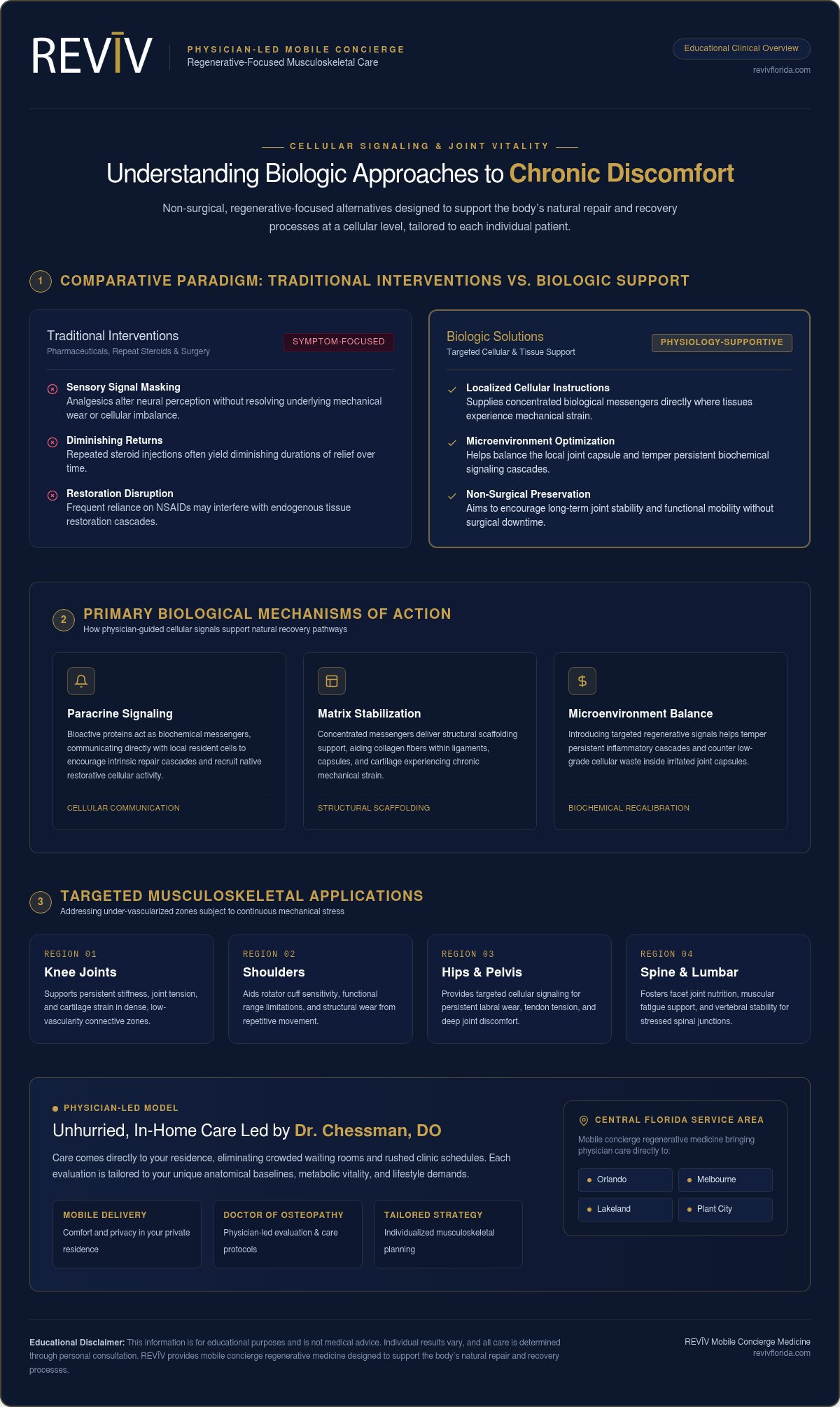
Regenerative biologics represent targeted, cellular-focused substances derived from natural biological components that help optimize the local joint environment and support the body’s intrinsic cellular recovery pathways. Unlike traditional pharmaceutical interventions that merely mask symptoms or systemic immunosuppressive drugs designed for autoimmune disorders, these localized approaches concentrate naturally occurring proteins and cellular signals directly where tissues experience persistent mechanical stress.
Exploring biologic solutions for chronic pain offers a proactive, non-surgical path that works alongside your body’s physiology. These therapies are frequently applied to ongoing structural issues, including:
- Persistent knee joint stiffness and cartilage strain
- Shoulder discomfort, rotator cuff sensitivity, and reduced mobility
- Hip tension and labral or tendon wear
- Spinal joint irritation and lumbar muscular fatigue
Because every patient possesses unique anatomy, baseline metabolic vitality, and lifestyle demands, care plans remain inherently individualized to address specific musculoskeletal microenvironments. To explore how dedicated clinics apply non-surgical, cell-based therapies to support natural recovery, learn more about modern regenerative options.
Understanding the Cellular Environment in Persistent Joint and Spine Discomfort
Persistent structural tension often stems from an imbalanced microenvironment characterized by continuous low-grade inflammation and reduced cellular renewal. Dense connective tissues, such as cartilage, ligaments, and tendons, feature naturally limited intrinsic blood supply, which can significantly slow spontaneous recovery. Applying specialized Orthobiologics delivers concentrated restorative signaling agents directly into these under-vascularized zones. For those exploring targeted joint care, seeking a specialized non surgical treatment for knee pain allows clinicians to introduce vital restorative proteins precisely where localized tissues need cellular support the most.
How Biologics Differ from Traditional Pharmaceutical Masking
Standard pharmaceutical pain management typically works by altering neural perception or interrupting sensory signals traveling to the brain. While analgesics offer temporary respite, they leave underlying structural wear entirely unaddressed. Frequent reliance on oral non-steroidal anti-inflammatory drugs (NSAIDs) can also disrupt normal tissue restoration cascades over time. In contrast, individualized biologic solutions for chronic pain focus on cellular health. Instead of temporarily dulling discomfort, they aim to help nourish the local joint space, modulate inflammatory signaling, and promote functional stability from within. Those looking to complement their routine with targeted cellular support supplements can check out Relieve Therapeutics to explore Palmitoylethanolamide (PEA) options.
The Biological Mechanisms: Supporting the Body’s Natural Repair Pathways
Understanding how the body maintains its structural integrity requires looking closely at cellular communication. When tissues undergo chronic mechanical strain, the biochemical equilibrium inside the joint capsule shifts. Cellular waste accumulates, restorative cellular activity slows, and inflammatory signals dominate the joint environment. Introducing physician-guided biologic solutions for chronic pain helps recalibrate this microenvironment by supplying concentrated biochemical instructions designed to support the body’s natural repair and recovery processes.
At the center of this response is a sophisticated network of bioactive proteins. These components function as biological messengers, fostering a supportive environment that encourages tissue vitality through several distinct pathways:
- Paracrine signaling: Bioactive proteins communicate directly with local resident cells to encourage intrinsic repair cascades.
- Extracellular matrix stabilization: Concentrated messengers help maintain structural scaffolding, supporting collagen fibers within ligaments and capsules.
- Microenvironment modulation: Introducing regenerative signals helps temper persistent inflammatory cascades within irritated joint capsules.
Cellular Signaling and Musculoskeletal Tissue Support
Concentrated growth factors and cytokines act as biochemical beacons, guiding native repair cells to regions of chronic micro-trauma. In intricate structures like the vertebral column, maintaining ligamentous stability and facet joint nutrition is essential. A detailed clinical evaluation reveals which structural junctions benefit most from targeted administration. For patients seeking non-surgical back support, exploring regenerative medicine spine Orlando offers targeted strategies designed to nurture stressed vertebral structures directly.
Targeted Cellular Nutrition and Systemic Longevity Support
Local cellular signaling requires robust metabolic fuel to succeed. Cellular fatigue and mitochondrial decline often restrict how efficiently tissues utilize regenerative signals. Implementing targeted cellular supplementation, such as individualized NAD+ protocols, helps optimize cellular energy production and maintain metabolic resilience throughout the musculoskeletal framework. Integrating localized joint therapies with broader longevity medicine Orlando strategies provides a comprehensive wellness model that nurtures the entire body. If you want to explore how these non-surgical, regenerative-focused options may support your active lifestyle, you can request a private consultation to discuss an individualized plan tailored to your personal goals.
Comparing Chronic Pain Interventions: Biologics vs. Traditional Options
Navigating structural joint issues often presents a difficult fork in the road. Patients are typically shuttled between temporary chemical suppression and invasive joint surgery. Making an informed healthcare choice requires evaluating your options across tissue preservation, procedural recovery, and systemic impact. Choosing biologic solutions for chronic pain shifts the primary therapeutic goal from mere symptom masking to nurturing the joint’s cellular foundation.
To understand where regenerative medicine fits within a proactive care strategy, consider how different clinical modalities interact with your native anatomy:
- Pharmaceuticals: Provide fleeting sensory comfort, carry systemic side effects, and offer zero cellular repair support.
- Corticosteroid Injections: Offer rapid short-term inflammation suppression, but carry risks of long-term tissue degradation.
- Surgical Arthroplasty: Permanently removes natural bone and cartilage, requires general anesthesia, and involves months of rehabilitation.
- Regenerative Biologics: Non-surgical, cell-supportive therapies designed to preserve native anatomy with minimal interruption to daily life.
Cortisone Injections Compared to Biologic Approaches
Corticosteroid injections remain common in conventional orthopedics because they blunt acute inflammation quickly. However, that rapid relief comes with trade-offs. Repeated steroid exposure inside a joint capsule can suppress local cellular protein synthesis, weaken structural ligaments, and accelerate articular cartilage thinning. Conversely, non-surgical biologic approaches deliver restorative signaling compounds. Rather than breaking down surrounding connective tissue for temporary quiet, they aim to support microenvironment health and maintain native joint architecture.
Evaluating Non-Surgical Regenerative Care Against Joint Surgery
Total joint arthroplasty completely removes your biological joint in favor of synthetic hardware. While necessary in advanced structural collapse, surgery carries procedural risks, potential surgical complications, and grueling rehabilitation periods that disrupt work and family routines. Biologic solutions for chronic pain represent an unhurried, conservative path. They involve outpatient administration with virtually no physical downtime, allowing individuals to maintain their everyday routines while their joint environment balances. Personalized clinical guidance helps clarify whether non-surgical intervention fits your structural status. For those experiencing persistent mobility restrictions in ball-and-socket joints, reviewing regenerative therapy for shoulder and hip pain provides clear, practical context on preserving natural joint mobility before considering permanent surgical alterations.
Determining Candidacy for Personalized Biologic Therapies
Selecting the appropriate path for joint preservation requires looking far beyond standard X-rays. In conventional settings, radiographic staging often dictates care without considering how you actually live and move. When exploring biologic solutions for chronic pain, candidacy evaluation is far more comprehensive. A thorough clinical assessment balances anatomical imaging with your functional goals, daily physical demands, and long-term vitality aspirations.
Ideal candidates are typically proactive individuals seeking non-surgical strategies to preserve native joint and spinal structures before considering invasive surgery. Whether your goal is maintaining an active athletic routine, enjoying fluid everyday mobility, or moving beyond temporary chemical masking, the process begins with an in-depth review of your joint mechanics. Because cellular environments and tissue recovery capacities differ from person to person, all care plans are individualized, and individual results naturally vary.
Key Diagnostic Factors and Comprehensive Assessment
Addressing Nerve Discomfort and Systemic Considerations
Structural joint strain often overlaps with nerve irritation, particularly within complex vertebral junctions. For individuals experiencing radiating tingling, numbness, or persistent sensory sensitivity, exploring targeted options such as neuropathy treatment Orlando ensures peripheral nerve pathways receive focused consideration alongside joint structures. Baseline metabolic vitality, systemic inflammation, and cellular energy also shape how efficiently tissues utilize regenerative signals. If you want to determine whether these non-surgical protocols fit your health goals, you can request a private consultation to review your history directly with our clinical team.
In-Home Concierge Regenerative Care in Central Florida
Traveling to a conventional medical clinic while managing persistent joint or spinal discomfort often feels counterproductive. Commuting through traffic, sitting in crowded waiting rooms, and navigating rushed appointments adds physical friction to an already challenging day. REVĪV redefines this experience by bringing physician-led regenerative consultations directly to your private residence. Serving communities throughout Central Florida, including Orlando, Winter Park, Maitland, Windermere, and Melbourne, this model delivers biologic solutions for chronic pain within a calm, familiar setting.
Physician-Led Care in the Comfort of Your Residence
Eliminating transit barriers protects your energy and respects your personal time. Under the clinical direction of Dr. Cheesman, DO, each visit provides unhurried osteopathic attention centered on functional anatomy and cellular wellness. Evaluating your joint mobility in your own living space gives our clinical team practical insight into your daily routines and biomechanics. For residents seeking private medical attention, learning more about mobile regenerative medicine Orlando illustrates how customized care comes directly to your door without the impersonal feel of hospital outpatient centers.
What to Expect During Your Private Consultation
Your in-home appointment centers entirely on your history, functional movement, and lifestyle goals. Dr. Cheesman, DO takes the time to listen thoroughly, ensuring you receive focused guidance. During this comprehensive visit, you can anticipate:
- A detailed review of your medical history, previous imaging, and past conservative interventions
- A functional movement evaluation to examine joint alignment, weight-bearing comfort, and range of motion
- An open, transparent conversation about whether non-surgical biologic solutions for chronic pain align with your needs
- A collaborative, tailored care plan designed to support your body’s natural repair pathways
Every strategy is tailored to your unique anatomical profile and daily priorities. This information is for educational purposes and is not medical advice. Individual results vary, and all care is determined through personal consultation.
Taking a Proactive Step Toward Natural Joint Vitality
Living with persistent joint or back discomfort shouldn’t force a compromise between temporary chemical relief and invasive surgery. By focusing on cellular communication, biologic solutions for chronic pain offer a thoughtful path forward designed to support your body’s natural repair and recovery processes. Combining localized tissue signaling with systemic vitality strategies, like specialized NAD+ protocols, helps foster a resilient environment where your native anatomy can thrive.
At REVĪV, premium medicine adapts to your life, not the other way around. As a private, physician-led mobile practice directed by Dr. Cheesman, DO, we bring attentive, unhurried regenerative care directly to your Central Florida residence. When you are ready to explore an individualized plan tailored to your functional goals, request a private consultation to begin your journey toward restored comfort and active living.
This information is for educational purposes and is not medical advice. Individual results vary, and all care is determined through personal consultation.
Frequently Asked Questions
What are biologic solutions for chronic pain and joint discomfort?
Biologic solutions for chronic pain are physician-guided regenerative options that use concentrated cellular and biological components to support your body’s natural repair pathways. Rather than masking sensory symptoms like synthetic drugs, these targeted substances introduce natural signaling proteins directly to stressed musculoskeletal areas. They help cultivate a balanced joint microenvironment, supporting cellular recovery and functional mobility across knees, shoulders, hips, and the spine.
How do regenerative biologic approaches differ from cortisone injections?
Cortisone injections work as temporary anti-inflammatory suppressants, whereas regenerative biologic approaches focus on preserving and supporting native joint architecture. While steroids provide quick, short-lived relief, repeated use can compromise connective tissue and thin articular cartilage over time. Biologic protocols introduce restorative signaling messengers designed to nurture local tissue microenvironments without degrading surrounding ligaments or joint surfaces. Each protocol is individualized to patient needs.
Can biologic therapies help me avoid joint replacement surgery?
Biologic therapies are non-surgical, regenerative-focused options designed to support joint health and potentially help delay or prevent the need for invasive joint replacement. By supporting the body’s natural recovery processes and nurturing native cartilage and ligaments, these therapies help maintain functional movement. Suitability depends entirely on your specific joint mechanics and degree of structural change, which Dr. Cheesman, DO evaluates during a personalized consultation. Individual results vary.
What conditions can be evaluated for regenerative-focused support?
Dr. Cheesman, DO evaluates structural discomfort across major joints, the spine, and peripheral nerve pathways. Common evaluations focus on persistent knee stiffness, shoulder mobility restrictions, hip tension, and vertebral facet strain. Additionally, REVĪV provides specialized regenerative care for neuropathy and cellular longevity protocols like NAD+ supplementation. Because every anatomical profile is distinct, recommendations are customized during an in-home assessment. Individual results and experiences naturally vary.
Who conducts the in-home mobile consultations across Central Florida?
All in-home concierge evaluations and procedures are conducted directly by Dr. Cheesman, DO across Central Florida communities. Rather than visiting a crowded clinic, patients in Orlando, Winter Park, Maitland, Melbourne, and nearby areas receive dedicated osteopathic care in their private residences. This mobile model ensures thorough, unhurried time to discuss your medical history, examine joint function in your daily living environment, and build a tailored care strategy.
Are biologic and regenerative care protocols painful to receive?
Most patients experience minimal discomfort during biologic procedures, which are performed with gentle, physician-guided precision in your residence. Dr. Cheesman, DO utilizes specialized techniques and comfort measures to ensure the process remains as seamless and tolerable as possible. Because these non-surgical solutions work alongside your natural physiology rather than altering structural anatomy, there is negligible recovery downtime compared to surgical interventions. Patients typically resume routine daily activities promptly.
How quickly might someone notice functional changes following biologic care?
Functional changes occur gradually as the body responds to targeted cellular signaling and repair processes. Unlike corticosteroids that offer immediate, fleeting relief, biologic solutions for chronic pain work progressively at the cellular level over several weeks or months. Tissue response timelines depend on your baseline vitality, metabolic health, and the specific joint involved. Progress is assessed collaboratively during follow-up reviews, keeping in mind that individual experiences and outcomes vary.
Disclaimer
For educational purposes only; not medical advice. Regenerative approaches
referenced are not FDA-approved to diagnose, treat, cure, or prevent any disease.
Individual results vary. Care is determined through individual consultation.
