
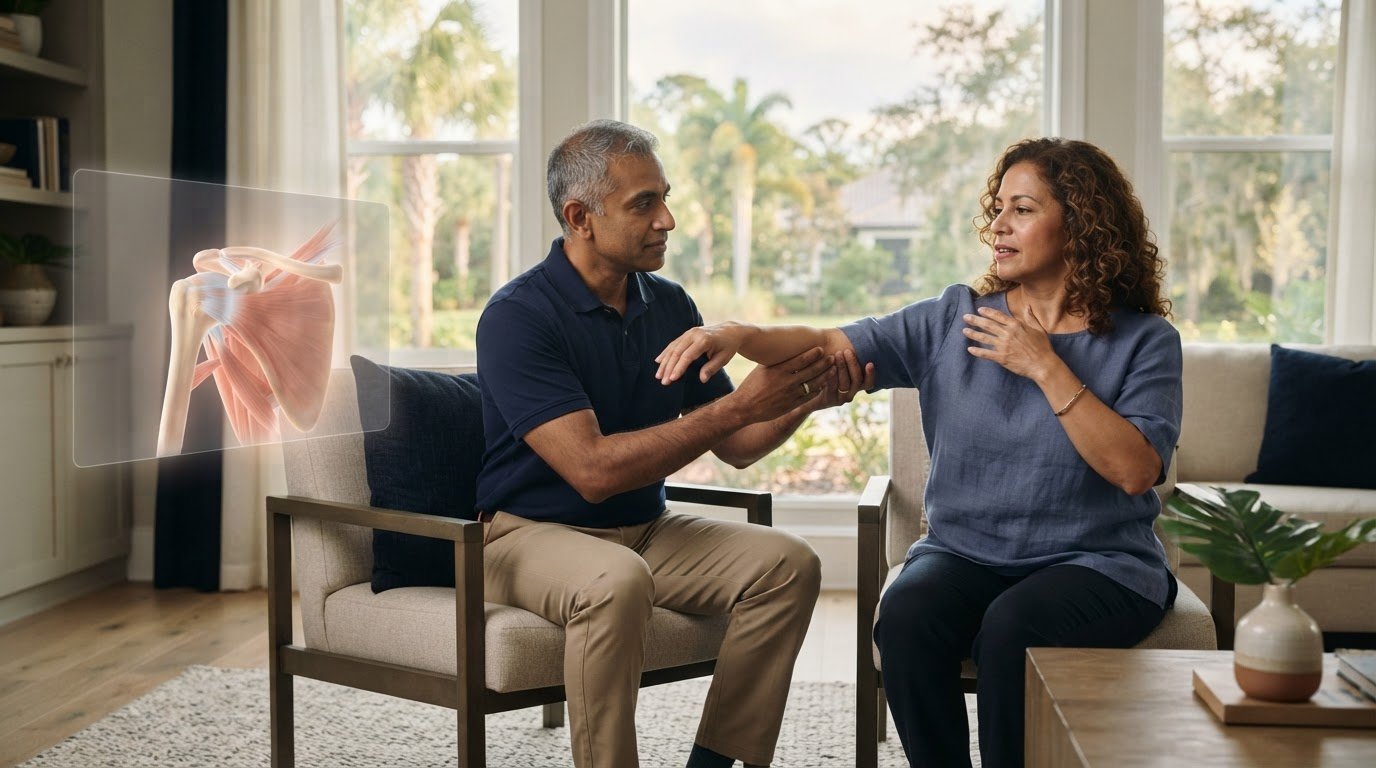
Non-Surgical Rotator Cuff Care in Longwood: Understand Your Options
Could non-surgical care support shoulder function without reattaching a torn tendon? If you’re searching for non-surgical rotator cuff repair Longwood, it helps to clarify what that phrase can mean: supportive care may address symptoms and movement goals, but it doesn’t surgically reconnect a tendon. Shoulder pain or limited movement alone also can’t confirm a rotator cuff tear.
It’s understandable to want relief and a clear path forward, especially when everyday tasks feel harder and treatment claims make it difficult to know what’s realistic. A useful next step is to understand what may be contributing to your symptoms, then discuss options in light of your goals and health history.
This guide explains what non-surgical care can and cannot do, how it differs from surgical tendon repair, and what questions to ask as you weigh your choices. It also covers how rehabilitation may fit into a care plan and how regenerative-focused options are described as supporting the body’s natural repair and recovery processes, without guarantees. REVĪV’s physician-led mobile concierge team can discuss individualized options during an in-home consultation in Longwood. Individual experiences vary, and potential benefits depend on personal consultation.
Key Takeaways
- Understand what “repair” means in non-surgical care, and why supportive options don’t surgically reattach a tendon.
- Learn how a clinician may consider your symptoms, shoulder function, and history before discussing next steps.
- Compare conservative care, rehabilitation, and a surgical consultation by their purpose, practical demands, and clinician involvement.
- Use a checklist to prepare your records, clarify your goals, and ask focused questions about personalized options.
- If you’re exploring non-surgical rotator cuff repair Longwood, learn how an in-home conversation with REVĪV’s physician-led team may help you discuss regenerative-focused options for your circumstances.
Non-Surgical Rotator Cuff Care in Longwood: What “Repair” Really Means
Shoulder pain can interrupt sleep, make reaching or dressing uncomfortable, and turn everyday movement into a challenge. But pain or limited motion alone can’t confirm what’s happening inside the shoulder. If you’re researching non-surgical rotator cuff repair Longwood, separate supportive care from the specific meaning of surgical repair.
What does a rotator cuff problem involve?
The rotator cuff is a group of tendons that connect shoulder muscles to the upper arm. Together, they help you lift and rotate your arm and keep the shoulder steady as you move. Irritation, injury, and other shoulder concerns can affect similar movements, so symptoms alone don’t establish that a tendon is torn. The overview of rotator cuff tears offers background on how these injuries may occur and be assessed, but it can’t identify the cause of an individual’s symptoms.
A clinician can consider your history, symptoms, and shoulder movement, then decide whether an examination or imaging is appropriate. The next step should follow an individual assessment, rather than an assumption that every painful shoulder has the same cause.
What can “non-surgical repair” mean in everyday searches?
In everyday searches, “non-surgical repair” often means care intended to support comfort, movement, or day-to-day function without an operation. It does not mean surgical reattachment of a torn tendon. Supportive care and surgery have different purposes, so one shouldn’t be presented as interchangeable with the other.
Non-surgical care may support shoulder function, but it does not surgically reattach a torn tendon. Which care may be appropriate, and what goals are realistic, depend on a clinician’s assessment and your circumstances. A physician-led discussion can help clarify whether non-surgical, regenerative-focused options are relevant to you, while recognizing that individual experiences vary.
How a Physician Evaluates Shoulder Pain Before Discussing Options
A thoughtful conversation starts with your experience, not an assumption about the cause. For people exploring non-surgical rotator cuff repair Longwood, an evaluation can clarify what’s known, what remains uncertain, and whether another kind of assessment may be useful before discussing care options.
What should you expect during an initial assessment?
A clinician may ask when the discomfort began, whether it followed a particular activity or injury, which movements are difficult, and how symptoms affect sleep and daily routines. They may also ask about previous evaluations or care, relevant health history, and what you hope to do more comfortably.
Depending on the setting and the clinician’s judgment, the discussion may include an examination of shoulder movement and function. Further assessment, imaging, or a referral may be appropriate for some people, but the next step isn’t the same for everyone. Mayo Clinic’s overview of evaluating shoulder pain describes how medical assessment can include an examination and, when appropriate, imaging.
An in-home consultation with a mobile concierge practice provides a setting to discuss your concerns and individualized options. It shouldn’t be assumed to replace an examination, imaging study, or referral if a clinician considers one necessary.
Which questions help clarify a suspected rotator cuff injury?
Focused questions can make the conversation more useful. Consider asking:
- What does my history and examination suggest, and what remains uncertain?
- Would imaging, another assessment, or a referral be useful for me?
- How might this concern affect my movement, and which goals are realistic to discuss?
- What is the purpose and practical commitment of each option, and how would follow-up work?
Before the conversation, note when symptoms started, which movements or activities you’ve changed, any previous evaluations, and relevant health history. Bring available records if you have them. This gives the clinician useful context without requiring you to identify the problem yourself.
Severe or sudden shoulder symptoms warrant prompt medical evaluation. A clinician can help determine the appropriate next step based on your circumstances.
To learn more about the practice’s approach, read about regenerative therapy for shoulder and hip pain. Potential benefits should be discussed individually, and experiences vary.
Compare Non-Surgical Rotator Cuff Options Without Assuming They Are Equivalent
Once you have a clearer picture of the concern, consider what each care pathway is intended to do. For people researching non-surgical rotator cuff repair Longwood, comparing options by purpose, clinician involvement, and practical demands is more useful than assuming they offer the same approach or results.
How do conservative care, rehabilitation, and surgery differ?
Clinician-guided conservative care is a broad category of non-operative steps that may suit a person’s symptoms and circumstances. Ask who will guide the plan, what it involves, and how the clinician will review whether it remains appropriate.
Rehabilitation is a distinct pathway focused on movement and function. A clinician can explain whether guided exercises or other rehabilitation support may be relevant, what participation involves, and how the plan would be adjusted to your needs. NYU Langone’s overview of nonsurgical treatments provides additional background on non-surgical approaches.
A surgical consultation is a separate conversation with a qualified surgical clinician about whether an operation may be relevant in light of an assessment, the shoulder concern, and your goals. Seeking an opinion doesn’t mean surgery is inevitable. Similarly, preferring non-surgical care doesn’t establish that it’s the right fit. The aim is to understand the available pathways and what each could mean for you.
What should you ask about regenerative-focused care?
REVĪV’s physician-led team can discuss non-surgical, regenerative-focused options during an individualized consultation. These options are designed to support the body’s natural repair and recovery processes. Whether they may be appropriate, and which goals to discuss, depends on your circumstances. They aren’t surgical tendon reattachment, and experiences vary.
Before considering a proposed approach, ask:
- What does the approach involve, and how would the plan be personalized to my situation?
- What is known about the option, and what remains uncertain?
- What practical steps or follow-up should I expect, and how would we discuss progress?
- How does this pathway compare with rehabilitation, other clinician-guided care, or a surgical opinion for my goals?
No pathway suits everyone. A useful discussion should leave you clearer on the purpose, practical demands, and unanswered questions, not promise a particular result. To explore whether an in-home conversation is appropriate, learn about a private consultation with REVĪV’s mobile concierge team.
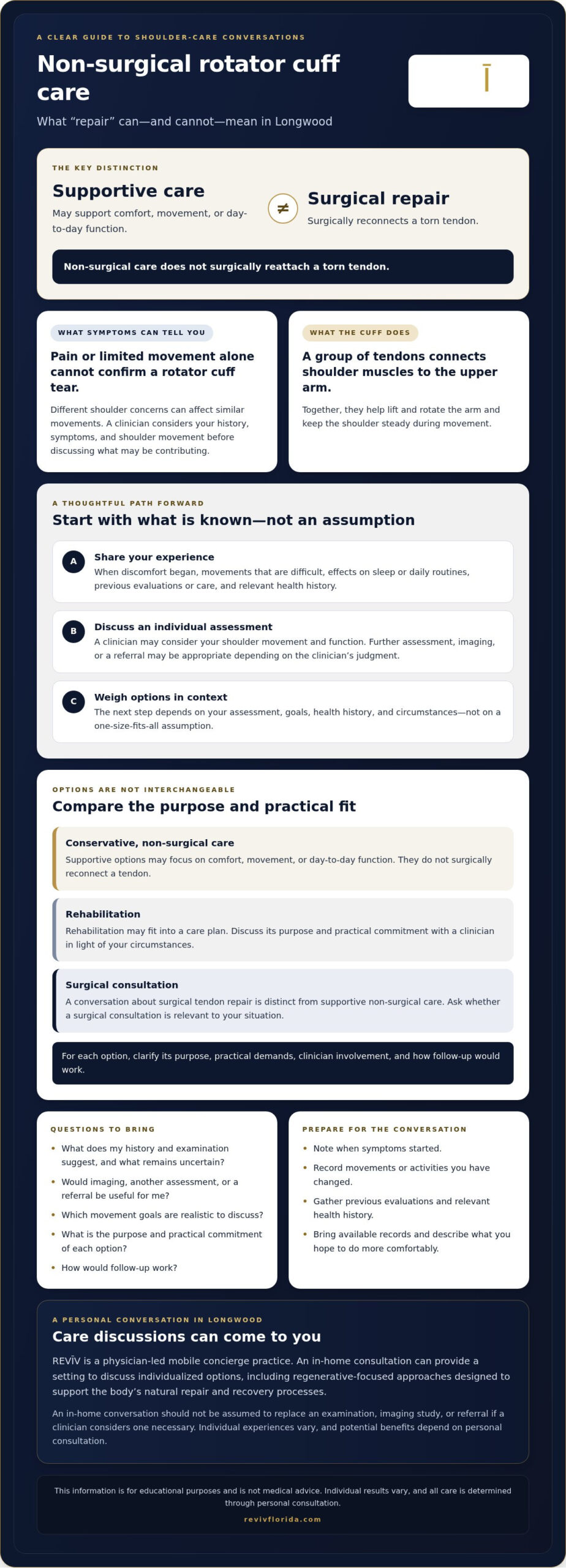
A Longwood Decision Checklist for Your Next Shoulder-Care Conversation
A little preparation can help you make better use of a shoulder-care conversation. Whether you’re comparing options for non-surgical rotator cuff repair Longwood or seeking clarity about shoulder symptoms, focus on what’s known, what you want to do more comfortably, and what you still need to ask.
How can you prepare for a shoulder-care consultation?
Before your conversation, write down when symptoms began, which movements are difficult, and how they affect your usual activities. Note previous evaluations or care, and bring available records or imaging reports if they’re relevant and easy to access. You don’t need to arrive with a diagnosis. A clear account of your experience is a useful starting point.
- Describe your goals: For example, you may want to discuss reaching overhead, getting dressed, or returning to a preferred activity.
- List your questions: Ask what is known, what remains uncertain, and whether further assessment may be appropriate.
- Share relevant health history: Mention information that may help the clinician understand your circumstances.
Which details matter when comparing providers in Longwood?
Ask who leads clinical decisions, how recommendations are tailored to you, and what follow-up conversations may involve. Compare the practical demands of each pathway, too. A plan should be explained clearly, including its purpose and any steps expected of you. No single option is right for everyone, and individual experiences vary.
Use this compact guide to organize your questions:
| What to compare | Questions to ask |
|---|---|
| Personalization | How will my goals and circumstances shape the discussion? |
| Clinical oversight | Who guides decisions, and when might further assessment be needed? |
| Practical demands | What would I need to do, and how does this fit my daily routine? |
| Follow-up | How will questions or changes in my experience be discussed? |
REVĪV is a physician-led mobile concierge practice, and Longwood is within its stated service area. Its local service area also includes Orlando, Winter Park, Maitland, Altamonte Springs, Casselberry, Orange City, DeLand, Deltona, Apopka, Oviedo, Winter Springs, Lake Mary, Sanford, Kissimmee, Winter Haven, Davenport, Titusville, Melbourne, and Melbourne Beach. Confirm directly whether your address can be served and ask how an in-home consultation works. An in-home discussion can help you explore individualized, regenerative-focused options, but it may not replace imaging, a referral, or another assessment if a clinician considers one appropriate. You can also read about mobile regenerative medicine in Orlando.
For a conversation about your circumstances, request a private consultation. Potential benefits are discussed individually, and experiences vary.
Discuss Personalized, Non-Surgical Shoulder Care at Home in Longwood
Understanding your options is a useful step toward a more informed shoulder-care conversation. REVĪV is a physician-led mobile concierge practice providing in-home regenerative medicine care, including in Longwood. Its clinical team can discuss your shoulder concerns and whether non-surgical, regenerative-focused options may fit your circumstances.
What can a REVĪV consultation help you discuss?
A consultation is an opportunity to describe what you’re experiencing, explain which movements or activities matter most to you, and ask questions about possible care considerations. The physician-led team can learn about your goals and discuss an individualized approach. Potential benefits should be considered through personal consultation, and individual experiences vary.
The conversation is exploratory, not a promise that a particular option will be suitable or that a specific result will follow. Your circumstances may call for additional assessment or a discussion with another clinician. If you have existing records or imaging reports, ask whether they would be useful to share.
How can Longwood residents take a considered next step?
If you’re looking into non-surgical rotator cuff repair Longwood, contact REVĪV to confirm whether its team currently serves your address and what to expect from an in-home consultation. Checking the logistics in advance can help you decide whether a mobile concierge visit suits your needs.
You don’t need to arrive with a particular diagnosis or a decision already made. Use the conversation to clarify your questions, discuss your priorities, and learn whether regenerative-focused options are relevant to explore. The team can explain considerations in plain language, with potential benefits considered through your individual consultation.
For a conversation about your circumstances, Request a private consultation.
This information is for educational purposes and is not medical advice. Individual results vary, and all care is determined through personal consultation.
Take a Clear, Personal Next Step for Your Shoulder
Shoulder symptoms don’t confirm a rotator cuff tear, and “non-surgical repair” doesn’t mean a torn tendon is surgically reattached. A clinician’s assessment can help clarify what may be contributing to your symptoms and whether further evaluation is appropriate. Comparing conservative care, rehabilitation, a surgical opinion, and regenerative-focused options by their purpose and practical demands can make your next conversation more informed.
If you’re considering non-surgical rotator cuff repair Longwood, REVĪV’s physician-led mobile concierge team can discuss your shoulder concerns and individual considerations during an in-home consultation. Ask the team to confirm current availability for your address and explain the visit logistics. Potential benefits depend on personal consultation, and individual experiences vary.
You don’t need every answer before you begin. Request a private consultation to discuss your goals and possible next steps.
This information is for educational purposes and is not medical advice. Individual results vary, and all care is determined through personal consultation.
Frequently Asked Questions
Can a rotator cuff tear be repaired without surgery?
Non-surgical care doesn’t surgically reattach a torn tendon. After an individual assessment, a clinician may discuss non-operative options that could support shoulder comfort or function, depending on your circumstances and goals. Searches for non-surgical rotator cuff repair Longwood may use “repair” broadly, so ask what a proposed option is intended to do and what it cannot do.
What non-surgical options may be discussed for rotator cuff concerns?
Depending on an individual assessment, a clinician may discuss conservative care, rehabilitation such as physical therapy, or non-surgical, regenerative-focused options. These pathways have different purposes and practical demands, and none is right for everyone. Ask who would guide each option, what participation involves, what is known or uncertain, and how follow-up would work. Potential benefits of regenerative-focused care should be discussed in personal consultation, and experiences vary.
Is regenerative-focused care the same as rotator cuff surgery?
No. Regenerative-focused care is non-surgical and is not an operation to reattach a torn tendon. It may be discussed as an option designed to support the body’s natural repair and recovery processes, depending on personal circumstances. Surgery is a distinct pathway that a qualified clinician can explain in relation to an assessment and your goals. A consultation can help clarify these differences without promising a particular result.
How is a rotator cuff problem evaluated?
A clinician typically begins by asking about your symptoms, when they started, relevant health history, and how shoulder movement affects daily activities. They may assess movement and function, then decide whether imaging or referral is appropriate for your situation. Shoulder pain alone doesn’t confirm a rotator cuff tear. Sharing prior evaluations, activity limits, and available records can make the discussion more informative.
Can REVĪV provide an in-home shoulder consultation in Longwood?
REVĪV is a physician-led mobile concierge practice offering in-home care, and Longwood is within its stated service area. Contact the team to confirm current availability for your address and ask how an in-home consultation works. The conversation can explore your shoulder concerns and whether individualized, regenerative-focused options may be relevant. It doesn’t determine a particular plan or outcome, and individual experiences vary.
When should I seek prompt medical evaluation for shoulder pain?
Seek prompt medical evaluation if shoulder symptoms are severe or come on suddenly. A clinician can assess what may be contributing to the symptoms and advise whether further evaluation is needed. Don’t rely on an online description to determine the cause or urgency of your situation. If you’re uncertain what to do, contact a qualified medical professional for guidance based on your circumstances.
Can non-surgical rotator cuff care mean I can avoid surgery?
Non-surgical care cannot promise that surgery will be unnecessary, and choosing a non-surgical option doesn’t determine what may be appropriate later. The decision depends on individual assessment, goals, and how the shoulder concern affects you. Ask a clinician what changes might prompt a new discussion about your options. Potential benefits should be considered in personal consultation; results and experiences vary.
Disclaimer
For educational purposes only; not medical advice. Regenerative approaches
referenced are not FDA-approved to diagnose, treat, cure, or prevent any disease.
Individual results vary. Care is determined through individual consultation.
