
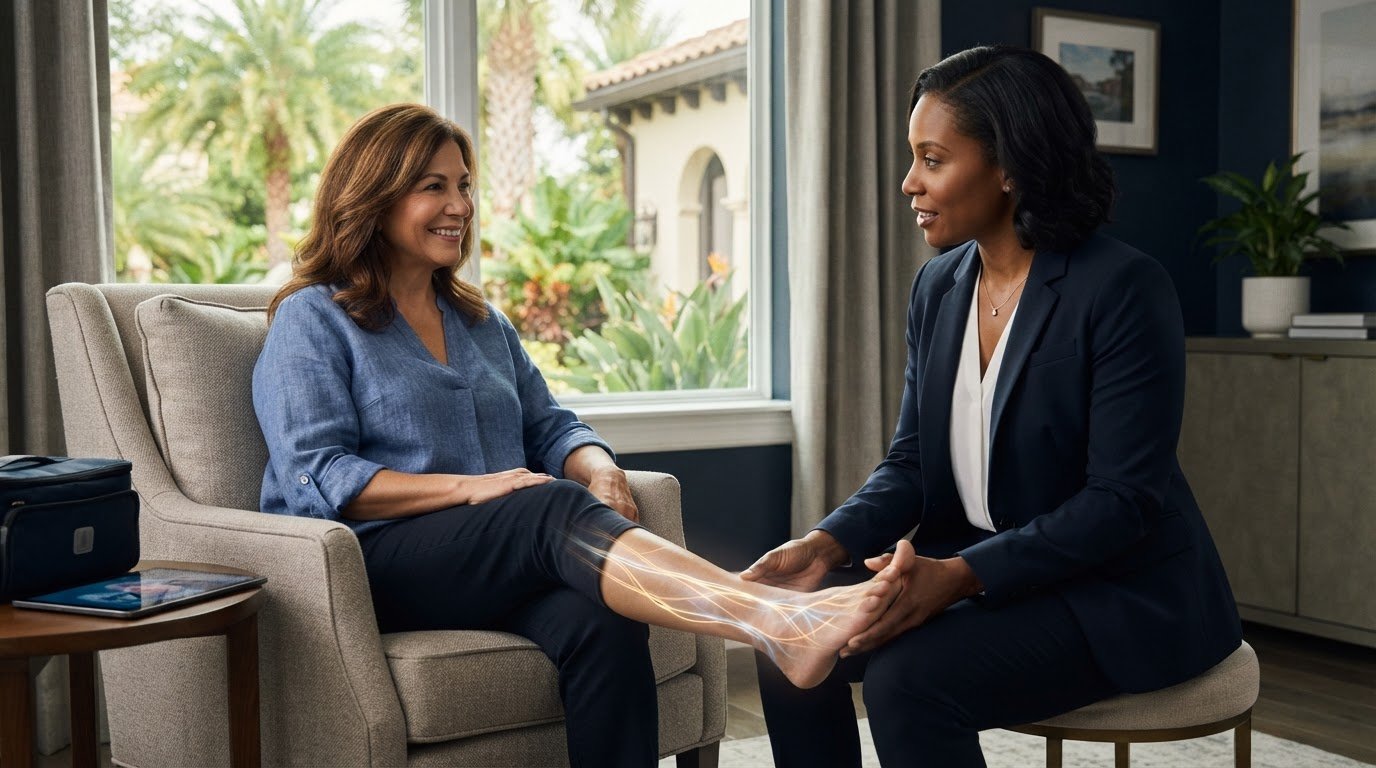
Regenerative Treatment for Peripheral Neuropathy: What to Know
Could regenerative-focused care be an option for peripheral neuropathy, or should the first step be understanding what may be behind your symptoms? Tingling, numbness, or discomfort can raise difficult questions, especially when online claims about nerve recovery conflict. That uncertainty calls for a thoughtful, individualized conversation, not a one-size-fits-all promise.
The cause matters. Peripheral neuropathy can have different underlying factors, and understanding them helps shape which options may be worth discussing with a physician. Research into regenerative treatment for peripheral neuropathy is ongoing, so it’s important to understand what current evidence can and cannot say before considering an approach.
This article explains what regenerative-focused care may involve, why identifying possible causes is an important starting point, and what questions to bring to a physician. You’ll also learn how to discuss potential benefits, limitations, and whether an individualized approach may fit your circumstances. REVĪV’s physician-led mobile concierge team provides care in the home and discusses options through personal consultation. Individual experiences vary.
Key Takeaways
- Peripheral nerve symptoms can have different causes, so exploring possible contributing factors is an important part of planning next steps.
- Learn what regenerative treatment for peripheral neuropathy may involve and how to discuss evidence, potential risks, and limitations with a physician.
- Compare care options by their goals, evidence, and practical considerations rather than assuming one approach fits everyone.
- Prepare for a consultation by noting your symptoms, when they occur, how they affect daily life, and your relevant medical history and medications or supplements.
- REVĪV’s physician-led mobile concierge team discusses neuropathy care individually, with care delivered in the patient’s home and options determined through personal consultation.
Peripheral Neuropathy Symptoms: Why Understanding the Cause Comes First
Peripheral neuropathy is a broad term for damage or dysfunction involving nerves outside the brain and spinal cord. These nerves carry signals related to sensation, movement, and other body functions. The term describes a nerve-related problem, but it doesn’t identify its cause or point to one care plan for everyone. The overview of Peripheral neuropathy offers additional background on possible signs, causes, and evaluation.
What peripheral nerve symptoms may feel like
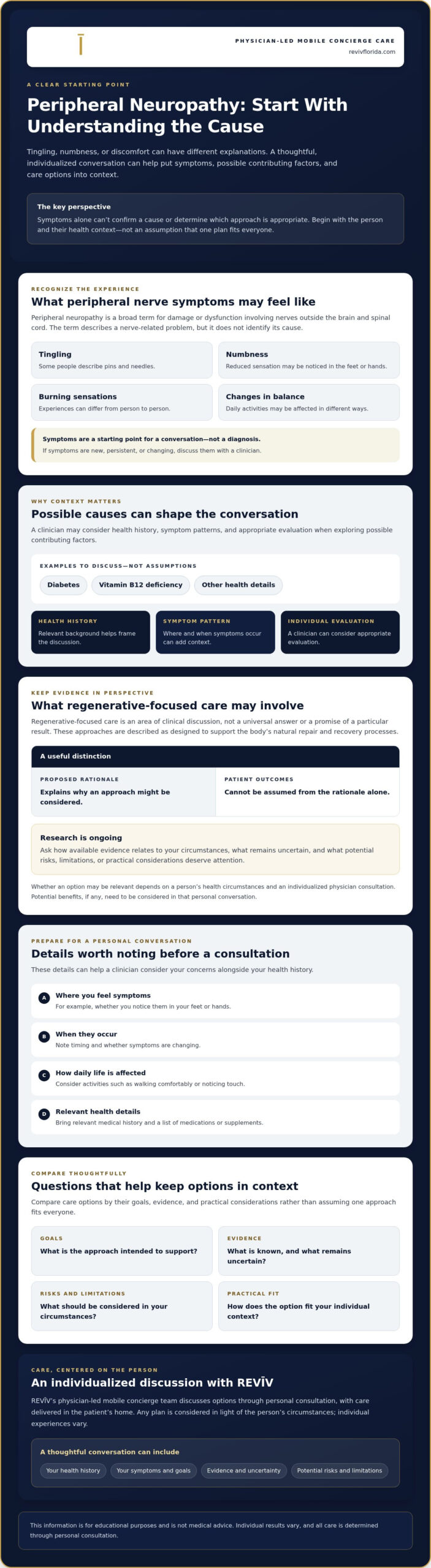
People may notice tingling, numbness, burning sensations, or changes in balance. Some describe pins and needles; others notice reduced sensation in their feet or hands. Symptoms can affect daily activities in different ways, from walking comfortably to noticing touch. These experiences can have different explanations, so symptoms alone can’t confirm a cause or establish which care approach is appropriate.
If symptoms are new, persistent, or changing, discuss them with a clinician. Note where you feel them, when they occur, whether they are changing, and how they affect your usual activities. These details can help the clinician consider your concerns alongside your health history.
Why identifying possible causes matters
A clinician may consider your health history, symptom pattern, and appropriate evaluation when exploring possible causes. Diabetes and vitamin B12 deficiency are examples to discuss, not assumptions about what is behind any one person’s symptoms. Other details about your health may also matter. Exploring possible contributing factors helps guide an individualized conversation about next steps.
This context matters before considering regenerative treatment for peripheral neuropathy. Regenerative-focused care is not a universal solution, and symptoms alone can’t determine whether it’s suitable. A physician can discuss what is known, what remains uncertain, and whether a personalized approach may be appropriate after an individual consultation. Experiences and results vary.
For more on an individualized perspective, read REVĪV’s neuropathy care guide in Orlando. The central principle is to begin with the person and their health context, rather than assume one explanation or plan fits everyone.
How Regenerative-Focused Care Relates to Peripheral Nerve Health
Regenerative-focused care is an area of clinical discussion, not a universal answer or a promise of a particular result. Broadly, these approaches are described as designed to support the body’s natural repair and recovery processes. Whether a particular option is relevant depends on a person’s health circumstances and an individualized physician consultation.
A proposed biological rationale explains why an approach might be considered; it doesn’t establish what outcomes a patient will experience. Keep that distinction in mind when assessing claims. The National Institute of Neurological Disorders and Stroke offers a peripheral neuropathy fact sheet for background on nerve health, symptoms, and possible causes. When discussing regenerative care, ask how the evidence relates to your situation, not just whether an approach sounds promising in theory.
What a regenerative-care discussion may include
A physician may ask about your health history, symptoms, personal goals, and any relevant evaluation before discussing options. The conversation can clarify what you hope to support, what is known about an approach, and which uncertainties or practical considerations deserve attention. It shouldn’t assume the same option suits everyone.
This article can’t determine individual eligibility or recommend a specific intervention. Potential benefits, if any, need to be considered in a personal consultation, and individual experiences vary. A careful discussion can also consider other aspects of your health that may be relevant.
What current evidence can and cannot tell you
Evidence needs context. When reviewing a study, consider who took part, how the research was conducted, what outcomes were assessed, and whether the findings apply to peripheral nerve health and your circumstances. Early findings or a proposed mechanism may help shape future research, but they don’t by themselves establish a predictable patient outcome.
Research into regenerative approaches for peripheral neuropathy is ongoing, and some approaches remain investigational for this concern. That makes careful, transparent discussion especially valuable. Ask a physician to distinguish emerging research from established clinical guidance, explain relevant risks and limitations, and clarify what is and isn’t supported by the available evidence. The phrase regenerative treatment for peripheral neuropathy can cover broad claims, so ask what a specific option means before weighing it.
To understand how an individualized conversation may work, you can learn about REVĪV’s physician-led approach. Care options are determined through personal consultation.
Comparing Peripheral Neuropathy Options Without Assuming One Fits Everyone
There isn’t one care path that suits everyone with peripheral nerve symptoms. A useful comparison starts with your goals and health context, then considers what each option is intended to address, what evidence applies, and what uncertainties remain. Regenerative-focused options shouldn’t be presented as established or suitable for everyone. They deserve the same careful, individualized discussion as any other consideration.
Use this framework to guide a conversation with a clinician. It compares questions to ask, not treatments to rank or outcomes to expect.
| Discussion point | Questions to consider |
|---|---|
| Underlying causes | What possible contributors have been considered? Is further evaluation relevant to my situation? |
| Personal goals | What would I hope to support in daily life, such as comfort, sensation, or balance? How will we discuss whether those goals are changing? |
| Evidence | What research relates to my specific circumstances and the option being discussed? Does it involve people like me, and what does it actually show? |
| Risks and limitations | What uncertainties, risks, or limits should I understand? What is known, and what remains unclear? |
| Practical considerations | What would participation involve, and how might it fit with my existing care, preferences, and daily routine? |
Questions to ask about benefits, evidence, and limitations
Ask the clinician to explain the evidence for the specific option in plain language. You might ask, “What is known for someone with my health history?” and “What can’t you conclude from the available research?” These questions help separate a proposed rationale from demonstrated outcomes. You can also ask how progress would be discussed, what might prompt a change in the plan, and what expectations would be realistic for your individual situation.
How to weigh individualized options
Consider how an option aligns with your personal goals, clinical context, preferences, and tolerance for its practical demands. Before changing existing care, discuss that decision with the clinicians involved in your health. Share relevant history and ask how different parts of a plan may fit together.
A conversation about regenerative treatment for peripheral neuropathy should leave room for questions, uncertainty, and an informed decision rather than pressure. Any potential benefit depends on individual circumstances and personal consultation. Experiences and results vary from person to person.
Preparing for a Physician Consultation About Neuropathy Care
A little preparation can make a health conversation more focused and useful. Before discussing regenerative treatment for peripheral neuropathy or other care options, gather a clear picture of what you’ve noticed and what matters most to you. You don’t need to arrive with a diagnosis. Your observations can help a clinician understand your concerns and consider what questions or evaluation may be relevant.
What to bring and discuss
Write down where symptoms occur, when they began, how they’ve changed, and what seems to affect them. Note their impact on daily activities and list questions you’d like answered. Bring relevant medical history, previous evaluation information, and a current list of medications and supplements. This information can help the clinician consider your situation as a whole.
Share any diagnoses and care you’re already receiving. Ask who will oversee recommendations, how they’ll be tailored to your health history, and whether further assessment or coordination with another clinician may be appropriate. You can also ask what is known, what remains uncertain, and how next steps would be discussed. You’re entitled to take time to understand your options.
Bring your symptom notes, health history, medication and supplement list, and questions so you can have an informed, unpressured conversation.
When symptoms need prompt medical attention
Seek prompt medical guidance if symptoms appear suddenly or change rapidly. If symptoms feel urgent or severe, contact appropriate local emergency care. This article can’t assess your symptoms or determine how quickly you need care. If you’re unsure, contact a qualified clinician for guidance rather than relying on general information.
Make space for an individualized discussion
A useful consultation should leave room to review your concerns, ask follow-up questions, and understand how recommendations relate to your individual circumstances. If you’re considering regenerative-focused care, ask how the physician will weigh your goals, relevant health information, and available evidence. No article can establish what’s suitable for you, and individual experiences and results vary.
For a no-pressure conversation about personalized neuropathy care, you can request a private consultation with REVĪV’s physician-led team. REVĪV is a mobile concierge practice that provides care in the patient’s home. Options are determined through personal consultation.
Considering REVĪV’s Mobile Concierge Neuropathy Care in Central Florida
For people exploring regenerative-focused neuropathy care, the next step can be a conversation, not a commitment. REVĪV is a physician-led mobile concierge practice serving Central Florida, with care delivered in the patient’s home. Its neuropathy care is discussed individually, not offered as a universal protocol or a promise of a particular outcome.
What to expect from an individualized conversation
A personal consultation gives the clinical team an opportunity to understand your health history, concerns, and goals before discussing possible options. You can share what you’ve noticed, what questions you have, and what matters to you in considering regenerative treatment for peripheral neuropathy. The team can then discuss whether any options may be appropriate to explore based on your circumstances. Potential benefits and suitability can’t be determined from an article; care decisions are made through personal consultation, and individual experiences vary.
Dr. Cheesman, DO is REVĪV’s clinical lead. In a conversation with the physician-led team, you can ask how recommendations are individualized, what is known and uncertain about an option, and what considerations may apply to your situation. Take the time you need to understand the discussion and decide what feels right for you.
A considered next step, without pressure
Before speaking with a clinician, gather your questions and relevant health information. Being open about your concerns, preferences, and current care can help make the conversation more useful. If you’d like background on REVĪV’s in-home model, read the mobile regenerative medicine overview.
If you’d like to discuss whether an individualized conversation may be helpful, you can request a private consultation. There’s no need to arrive with a predetermined choice. The purpose is to ask questions, understand possible options, and consider next steps in light of your personal circumstances.
This information is for educational purposes and is not medical advice. Individual results vary, and all care is determined through personal consultation.
Take a Thoughtful Next Step Toward Personalized Care
Peripheral nerve symptoms can have different causes, so understanding your health context is a more useful starting point than assuming one option fits everyone. Research into regenerative treatment for peripheral neuropathy is still developing. Discuss any proposed approach carefully, including what evidence applies, what remains uncertain, and what may be appropriate for you.
Bring your questions, symptom notes, and relevant health information to a physician conversation. A thoughtful discussion can help you weigh your goals and preferences without pressure to choose a particular path. Individual experiences and results vary, and care decisions depend on personal consultation.
REVĪV’s physician-led clinical team offers mobile concierge care delivered in the patient’s home. If you’d like to explore whether an individualized conversation may be helpful, request a private consultation.
Each step can begin with a question, not a commitment. This information is for educational purposes and is not medical advice. Individual results vary, and all care is determined through personal consultation.
Frequently Asked Questions
What is regenerative treatment for peripheral neuropathy?
The phrase describes regenerative-focused care discussed in relation to peripheral nerve health. In general, these approaches are designed to support the body’s natural repair and recovery processes, but the term doesn’t identify one specific option or guarantee an outcome. Evidence varies, and research is ongoing. A physician can explain what is known, what remains uncertain, and whether an individualized discussion may be relevant to your health circumstances.
Can regenerative-focused care help with peripheral neuropathy symptoms?
It isn’t possible to predict from symptoms alone whether regenerative-focused care may be helpful for an individual. Research into these approaches for peripheral neuropathy is ongoing, and findings or proposed biological explanations don’t establish what a person will experience. A physician can consider your health history, goals, and relevant evaluation before discussing potential options. Any possible benefits and limitations need to be considered through personal consultation, and individual experiences vary.
What causes peripheral neuropathy?
Peripheral neuropathy can have different possible causes, and symptoms don’t reveal the cause on their own. Diabetes and vitamin B12 deficiency are examples to discuss with a clinician, not assumptions about your situation. Health history and other individual factors may also be relevant. If you notice tingling, numbness, burning sensations, or changes in balance, share when they began and how they affect daily activities with a clinician.
How is peripheral neuropathy evaluated before considering care?
A clinician may review your symptoms, health history, current care, and any previous evaluation to understand your situation. Depending on your circumstances, they may discuss whether further assessment or coordination with another clinician is appropriate. Bring a current list of medications and supplements, relevant diagnoses, and notes about when symptoms occur or change. This information can support an individualized discussion, but an article can’t determine a diagnosis or care plan.
Is regenerative care appropriate for everyone with peripheral neuropathy?
No. Regenerative-focused care shouldn’t be assumed suitable for everyone, and it shouldn’t be presented as a guaranteed result. Whether an option is worth discussing depends on factors such as your health history, the possible cause of symptoms, personal goals, and the evidence and limitations relevant to the option. A physician can help you consider these points in consultation. Experiences and results vary from person to person.
What should I ask a physician about regenerative neuropathy care?
Ask what evidence applies to your specific circumstances, what remains uncertain, and what risks or limitations deserve attention. You might also ask how recommendations would be tailored to your health history, who will oversee your care, and how progress or possible changes in the plan would be discussed. Share your current care and preferences openly. You don’t need to decide during the conversation; the goal is to make an informed choice.
Does REVĪV offer in-home neuropathy care in Central Florida?
Yes. REVĪV is a physician-led mobile concierge practice offering individualized neuropathy care, with care delivered in the patient’s home. Its Central Florida service area includes Orlando, Winter Park, Maitland, Altamonte Springs, Longwood, Casselberry, Orange City, DeLand, Deltona, Apopka, Oviedo, Winter Springs, Lake Mary, Sanford, Kissimmee, Winter Haven, Davenport, Titusville, Melbourne, and Melbourne Beach. Options are discussed through personal consultation.
Disclaimer
For educational purposes only; not medical advice. Regenerative approaches
referenced are not FDA-approved to diagnose, treat, cure, or prevent any disease.
Individual results vary. Care is determined through individual consultation.
