
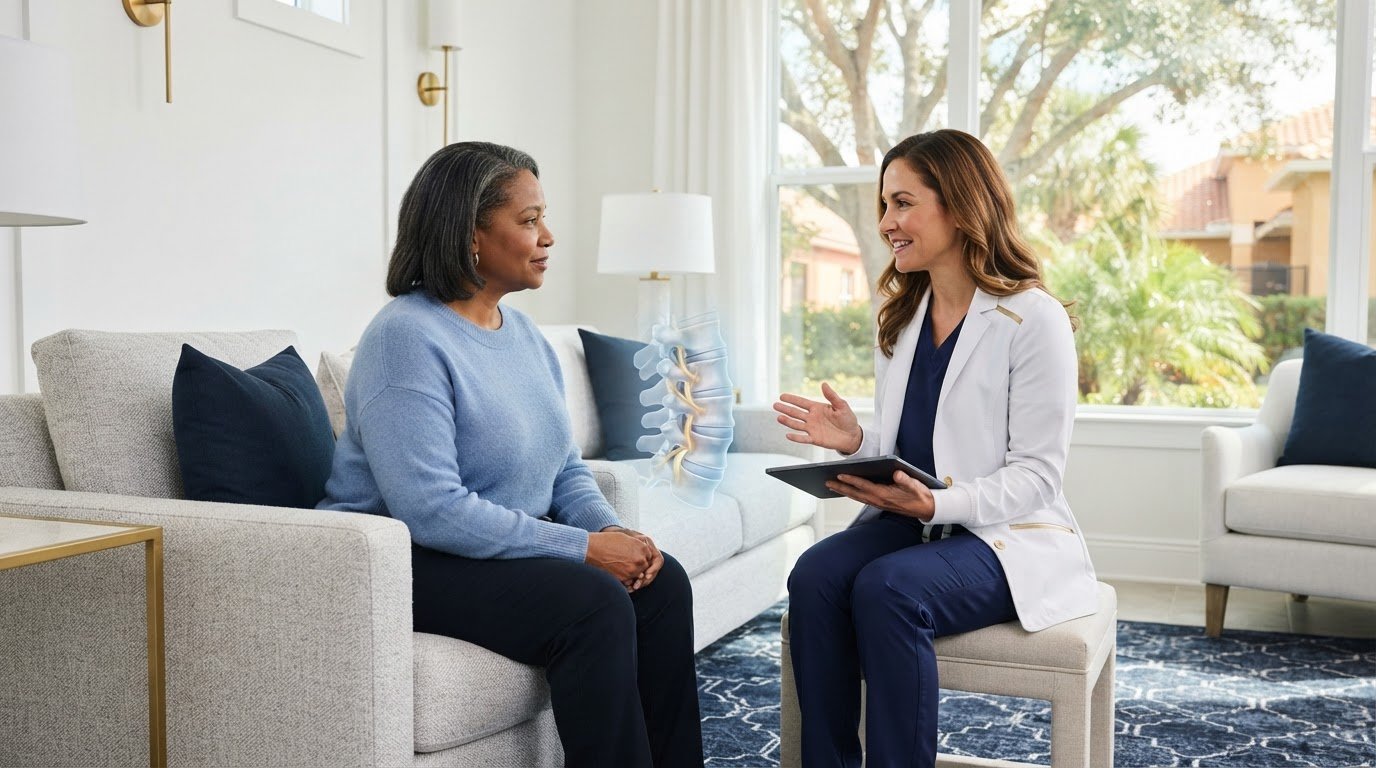
Non-Surgical Spinal Stenosis Care in Orange City
A spinal stenosis diagnosis doesn’t, by itself, determine what your next step should be. It’s understandable to wonder whether surgery is the only meaningful path, especially when back or leg symptoms affect everyday movement. For people exploring non-surgical options for spinal stenosis Orange City, a useful starting point is understanding how symptoms, health history, and personal goals shape the conversation.
Non-surgical approaches can serve different purposes. A clinician may discuss movement and exercise, activity adjustments, or other forms of care based on individual needs. A personalized evaluation can help clarify what information matters, including symptom patterns and relevant imaging, and whether regenerative-focused options designed to support the body’s natural repair and recovery processes merit discussion. These options aren’t a guaranteed substitute for surgery or other care, and individual experiences vary.
This article explains common approaches, what to prepare for a consultation, and how REVĪV’s physician-led mobile concierge practice brings an individualized conversation to your home in Orange City. Dr. Cheesman, DO, leads the clinical team. This information is for educational purposes and is not medical advice. Individual results vary, and all care is determined through personal consultation.
Key Takeaways
- Spinal stenosis describes narrowing around spinal nerves, but imaging findings and day-to-day symptoms don’t always match.
- A useful evaluation considers symptom patterns, functional goals, relevant health history, and any available imaging.
- Compare non-surgical options for spinal stenosis Orange City by their purpose, personal fit, and limitations, rather than expecting one approach to suit everyone.
- Prepare for a consultation by noting your symptoms, goals, current care, medical history, and questions about how progress will be discussed.
- REVĪV’s physician-led mobile concierge practice offers individualized in-home consultations in Orange City to discuss whether regenerative-focused options may be relevant to your goals.
What spinal stenosis means, and why symptoms can differ in Orange City
Pain, tingling, numbness, weakness, or changes in how far you can walk can raise understandable questions, especially when spinal imaging mentions narrowing. Spinal stenosis describes a narrowing of spaces in the spine that can leave less room for nerves. It doesn’t automatically mean someone will have symptoms. In plain language, spinal stenosis is a narrowing around the pathways that spinal nerves travel through.
The narrowing may involve the central spinal canal or smaller openings where nerves pass between bones. Its location and degree are only part of the picture; they don’t determine by themselves what a person feels or how daily activities are affected. General background on Spinal Stenosis can help explain the term, but it can’t establish what’s causing an individual’s symptoms.
What changes in the spine can contribute to narrowing?
Age-related changes in spinal structures may contribute to narrowing. For example, changes involving the discs, joints, or nearby tissues can affect the space around nerves. The cause isn’t the same for everyone, so a general explanation can’t identify why narrowing appears in a particular person.
Cervical stenosis refers to narrowing in the neck region; lumbar stenosis refers to narrowing in the lower back. These areas relate to different parts of the spine and may be associated with different symptoms. Imaging can show anatomy, but a finding on a scan doesn’t always explain a person’s discomfort or movement changes.
Which symptoms deserve careful attention?
Possible symptoms include pain, tingling, numbness, or weakness. Some people notice changes during standing or walking, while others experience a different pattern or no noticeable symptoms. The impact can range from occasional discomfort to movement concerns that interfere with familiar routines.
Sudden severe weakness or new changes in bowel or bladder control need urgent medical evaluation. For other symptoms, a clinician can interpret what you’re experiencing alongside your health history and an appropriate evaluation. Educational information about non-surgical options for spinal stenosis Orange City can help you prepare questions, but it isn’t a personal diagnosis or care plan.
How clinicians evaluate spinal stenosis before discussing non-surgical options
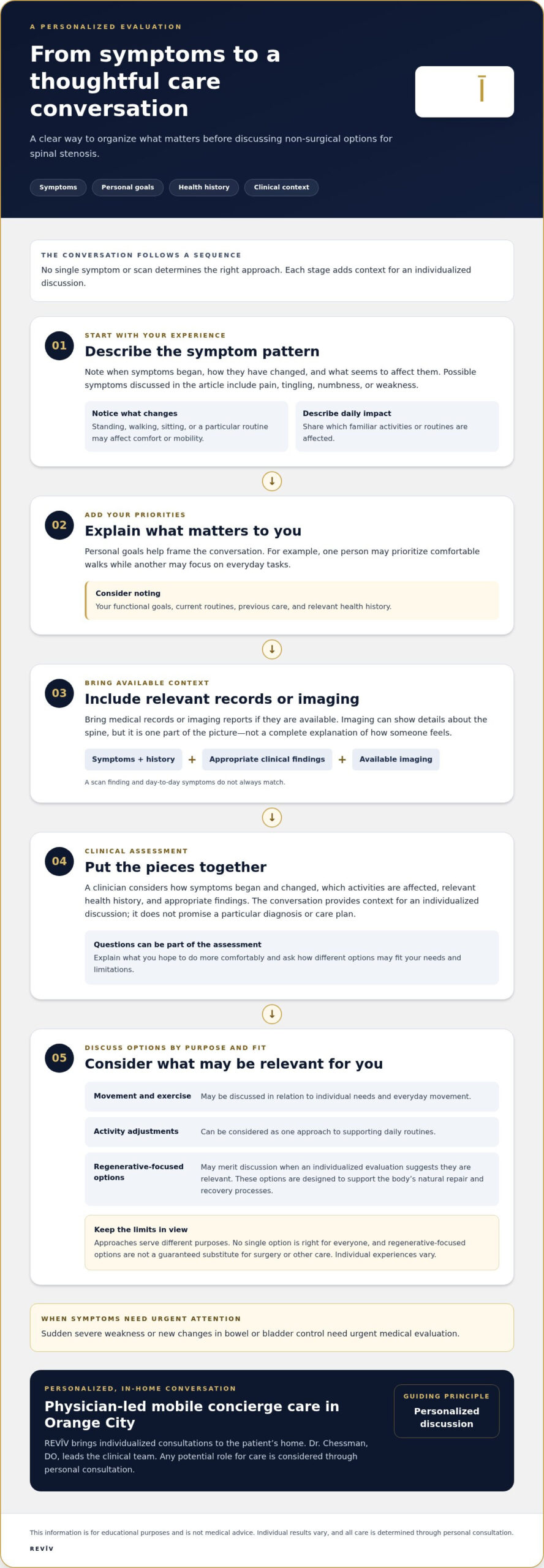
A consultation is a conversation and clinical assessment, not a promise of a specific diagnosis or care plan. A clinician considers how symptoms began and changed, which activities are affected, and what matters most to you. A thoughtful evaluation brings symptoms, personal history, and appropriate clinical findings together.
Imaging can provide useful detail about the spine, but a scan is one part of the picture. A clinician interprets it alongside your reported symptoms and other relevant findings rather than assuming that every visible change explains how you feel. The Mayo Clinic on Spinal Stenosis also describes how symptoms, examination, and imaging can inform an evaluation.
What should a patient expect during an initial consultation?
Before a consultation, note when symptoms began, what seems to affect them, and how they influence daily activities. Consider whether standing, walking, sitting, or a particular routine changes your comfort or mobility. Bring relevant medical records or imaging reports if they’re available.
Use the conversation to explain what you hope to do more comfortably and ask questions about your options. The clinician can discuss your concerns and whether further evaluation may be appropriate. An assessment doesn’t automatically point to one option; it provides context for an individualized discussion.
Why does symptom severity and personal health history matter?
Two people with similar scan descriptions may have different symptoms, priorities, and health histories. One person may want to maintain comfortable walks, while another may be focused on everyday tasks. These goals help frame which considerations deserve attention in a personalized conversation.
Other health conditions, previous care, and current routines may also influence which options are appropriate to discuss. Symptoms or imaging descriptions alone can’t determine a personal diagnosis or plan. For readers considering non-surgical options for spinal stenosis Orange City, this fuller context helps make the discussion relevant without assuming a particular outcome.
REVĪV’s physician-led mobile concierge practice brings individualized consultations to patients in Orange City. If you’d like to discuss your symptoms, relevant history, and goals in the context of non-surgical, regenerative-focused care, you can request an in-home consultation. Any potential role for care is considered through personal consultation, and individual experiences vary.
Comparing non-surgical options for spinal stenosis: purpose, fit, and limits
Non-surgical approaches can serve different purposes, from supporting everyday movement to discussing symptom management. Their suitability depends on personal symptoms, health history, goals, and clinical assessment. No single approach is right for everyone, and none should be assumed to change spinal narrowing or replace surgery when surgery or other care is being considered.
The comparison below can help organize a conversation about non-surgical options for spinal stenosis Orange City. For additional background on common care approaches, see Hospital for Special Surgery on Spinal Stenosis.
| Approach | General purpose | Questions for a clinician |
|---|---|---|
| Movement-focused rehabilitation | May help support mobility and everyday function through individualized movement or rehabilitation guidance. | What kinds of movement fit my current abilities and goals? How should the plan be adjusted if symptoms change? |
| Activity adjustments | May help a person adapt routines around activities that affect comfort or movement. | Which activities should I monitor, and what adjustments might be reasonable for my circumstances? |
| Symptom-management discussions | Allow a clinician to review possible ways to address symptoms in light of personal health factors. | What options are appropriate to discuss given my history and current care? |
| Clinician-guided regenerative-focused care | May be considered as an individualized, non-surgical approach designed to support the body’s natural repair and recovery processes. | What role, if any, could this have in my personal care plan, and what are its limitations? |
How can conservative care support everyday function?
Movement, activity modification, and rehabilitation may be discussed according to a person’s needs. A clinician can relate these approaches to meaningful activities, such as standing comfortably for a routine task or maintaining a preferred walking routine. These are examples of personal goals, not promised outcomes. Avoid starting a new exercise or medication plan based only on general information; recommendations should reflect an individual clinical assessment.
Where may regenerative-focused care fit in the conversation?
REVĪV’s physician-led clinical team offers personalized, regenerative-focused care for spine and back concerns. Following an individual consultation, the team can discuss whether this approach may be relevant to a person’s goals and health context. Potential benefits are individual, and experiences vary. Regenerative-focused care isn’t a guaranteed alternative to surgery or other clinical care, and it shouldn’t be presented as changing the underlying narrowing. Read more about regenerative medicine for spine pain in Orlando for related background.
Choosing a next step for spinal stenosis in Orange City
A useful next step begins with clear information about what you’re experiencing and what you hope to do more comfortably. Before a clinical conversation, gather:
- Symptoms: When they began, what seems to affect them, and whether they’re changing.
- Goals: Activities or routines you’d like to maintain or return to.
- Health history: Relevant conditions, prior care, and records or imaging reports you have available.
- Current care: Approaches you’re using now and how they fit into your daily life.
- Questions: What each option aims to support, its limits, and how progress will be discussed.
As you compare non-surgical options for spinal stenosis Orange City, consider each option’s purpose, personal fit, limitations, and relationship to your goals. Progress can be discussed in terms of meaningful daily function, such as whether a routine activity feels more manageable, without assuming a particular result. An individualized plan may also evolve as symptoms and priorities change.
What questions can help clarify your options?
Consider asking: What may be contributing to my symptoms, and what findings support that view? What is each option intended to support, and what are its limitations? How do my goals, health history, and current care shape the discussion? How will we review my experience and decide whether the plan still fits?
These questions keep the conversation grounded in your circumstances rather than a general promise. You can also ask whether additional evaluation is appropriate. Surgery is neither inevitable nor something to rule out in advance; decisions about it require individualized clinical judgment and discussion of the person’s situation.
When should symptoms receive prompt medical attention?
Sudden severe weakness or new bowel or bladder changes warrant urgent medical evaluation. For worsening symptoms or a meaningful change in function, arrange a timely clinical discussion. Online information can help you prepare, but it can’t determine the cause of symptoms or substitute for personal evaluation.
REVĪV is a physician-led mobile concierge practice serving Orange City and Central Florida. An in-home consultation offers a setting to discuss symptoms, relevant history, and personal goals with the clinical team. Learn more about the mobile regenerative medicine in Orlando model, or request a private consultation to explore whether an individualized, regenerative-focused conversation may fit your needs. Any potential role for care depends on personal consultation, and individual experiences vary.
Physician-Led In-Home Care with REVĪV in Orange City
For people exploring non-surgical options for spinal stenosis Orange City, REVĪV offers a physician-led mobile concierge approach to discussing spine and back concerns. The team serves Orange City and communities across Central Florida, bringing care to the patient and creating an opportunity to talk through symptoms, relevant health history, and personal goals at home.
What makes a mobile concierge consultation different?
Instead of visiting a walk-in clinic, you can have an individualized conversation in your home. The setting may help you describe how symptoms relate to daily routines and what you’d like to maintain or do more comfortably. The focus is attentive discussion, not a predetermined plan. The clinical team considers your circumstances and tailors the conversation to your needs.
This consultation-led approach is physician-led by Dr. Cheesman, DO, and the clinical team. It offers space to discuss your concerns, questions, and priorities without assuming that one care path suits everyone. To learn more about the in-home approach, read about non-surgical spine pain care in Orlando.
What to expect from an individualized discussion
The team can consider your health history, current concerns, and functional priorities together. You might discuss which daily activities feel challenging, what care you’ve already explored, and what questions you have about possible next steps. Relevant records or imaging reports can help inform the conversation when available, but they don’t replace clinical judgment.
REVĪV’s regenerative-focused options are designed to support the body’s natural repair and recovery processes. Whether an option may be appropriate, and what role it could have in an individualized plan, can only be discussed through personal consultation. These options aren’t a guaranteed alternative to surgery or other clinical care, and no specific change in symptoms or avoidance of surgery can be promised. Individual experiences and results vary.
If you’re considering a thoughtful next step, you’re welcome to request a private consultation with REVĪV’s clinical team. This information is for educational purposes and is not medical advice. Individual results vary, and all care is determined through personal consultation.
Take a considered next step toward personalized care
Spinal stenosis can affect people differently, so a scan alone doesn’t tell the whole story. Symptoms, health history, daily priorities, and clinical findings all help shape a useful conversation. Comparing non-surgical options for spinal stenosis Orange City means considering each option’s purpose, personal fit, and limitations, rather than expecting one approach to suit everyone.
REVĪV’s physician-led clinical team, led by Dr. Cheesman, DO, offers mobile concierge care in Orange City and Central Florida. An individualized in-home consultation provides space to discuss your concerns and goals, and whether regenerative-focused options may be relevant to your personal care planning. Experiences and results vary.
To explore a thoughtful next step, request a private consultation. A personal conversation can help you consider options in light of your circumstances.
This information is for educational purposes and is not medical advice. Individual results vary, and all care is determined through personal consultation.
Frequently Asked Questions
What are the non-surgical options for spinal stenosis?
Options a clinician may discuss include movement-focused rehabilitation, activity adjustments, symptom-management approaches, and individualized regenerative-focused care. For someone exploring non-surgical options for spinal stenosis Orange City, the key is understanding each option’s purpose, possible role, and limitations. No approach is suitable for everyone, and these options shouldn’t be assumed to change spinal narrowing. A clinician can connect the discussion to your symptoms, health history, and personal goals.
Can spinal stenosis be managed without surgery?
Some people discuss non-surgical approaches with a clinician, but what’s appropriate depends on individual symptoms, health history, and clinical findings. Conversations may include movement, activity adjustments, symptom-management options, or regenerative-focused care. These approaches have different purposes and limits, and individual experiences vary. A personal evaluation can help clarify what may be relevant and whether additional care should be considered. General information can support preparation, but it can’t determine a care plan.
How is spinal stenosis evaluated before choosing an option?
Evaluation generally considers symptom history, relevant medical history, functional goals, and appropriate clinical findings. A clinician may ask when symptoms began, what affects them, and how they influence activities. Imaging reports can provide useful information, but they’re interpreted in context rather than treated as a stand-alone answer. Bringing relevant records and noting questions beforehand can make the discussion more useful. The evaluation informs a conversation; it doesn’t guarantee a particular diagnosis or plan.
Does spinal stenosis always require surgery?
No. A spinal stenosis diagnosis doesn’t automatically mean surgery is required. The next step depends on a person’s symptoms, health context, functional priorities, and clinical assessment. Some people discuss non-surgical approaches, while surgery may also be part of an individualized clinical conversation. Neither outcome should be presumed in advance. A clinician can explain the potential role and limitations of options in light of your situation and help you understand what further evaluation may be appropriate.
Can regenerative-focused care help with spinal stenosis symptoms?
Regenerative-focused care may be discussed as an individualized, non-surgical option designed to support the body’s natural repair and recovery processes. Whether it may be relevant to your concerns or goals can only be considered through personal consultation. It isn’t a guaranteed alternative to surgery or other clinical care, and no specific symptom change should be promised. Individual experiences and results vary. A physician-led discussion can help clarify the approach’s potential role and limitations for you.
Is in-home spinal care available in Orange City?
Yes. REVĪV is a physician-led mobile concierge regenerative medicine practice serving Orange City and Central Florida. Care comes to the patient, allowing the clinical team to discuss concerns, relevant health history, and personal goals at home. Its service area includes Orlando, Winter Park, Maitland, Altamonte Springs, Longwood, Casselberry, Orange City, DeLand, Deltona, Apopka, Oviedo, Winter Springs, Lake Mary, Sanford, Kissimmee, Winter Haven, Davenport, Titusville, Melbourne, Melbourne Beach, Lakeland, and Plant City.
When should spinal stenosis symptoms receive urgent attention?
Sudden severe weakness or new bowel or bladder changes warrant urgent medical evaluation. Worsening symptoms or meaningful changes in function also deserve timely discussion with a clinician. Don’t rely on an online description to determine what’s causing a change or how serious it may be. Share what has changed and when it began so a clinician can assess the situation. This FAQ is educational and isn’t a substitute for medical advice or personal evaluation.
Disclaimer
For educational purposes only; not medical advice. Regenerative approaches
referenced are not FDA-approved to diagnose, treat, cure, or prevent any disease.
Individual results vary. Care is determined through individual consultation.
